Check out a short and simple landscape painting demo that focuses on the underpainting part of the process.
Click here to see this email on the web |  | Tuesday, November 22, 2022 | | Quick Demo: Establishing a Strong Underpainting | Share this article:     | "The aspens were in full fall color display at a higher elevation in the Eastern Sierra," says Kim Lordier. "I dropped down onto the valley floor and came across this beautiful stand of cottonwoods just starting to turn. The dramatic passing clouds and strong shadows were hard to pass up."
Step 1
Lordier uses a hard NuPastel to lay in the preliminary sketch, then sets a light layer of pastel into the shapes, using a general value and neutral color for each one. | 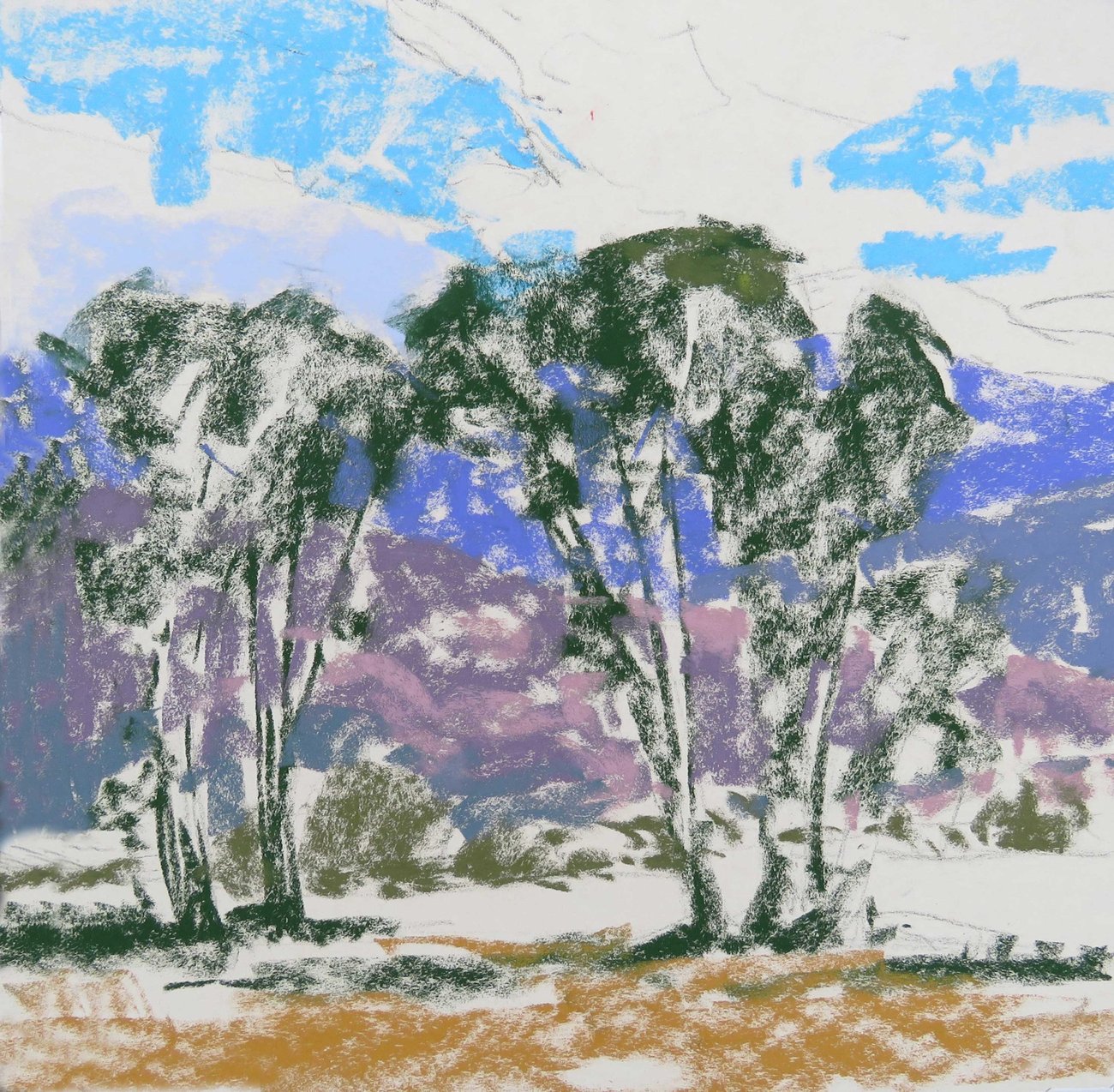 | ***
Step 2
Using a large hog bristle brush dipped into a small amount of Turpenoid, she goes over one shape at a time, melting the pastel but trying not to mix the colors at this point.
The gestures of her strokes mimic the gestures of the objects she is painting. The Turpenoid takes approximately five minutes to dry, and then she is able to apply color on top. | 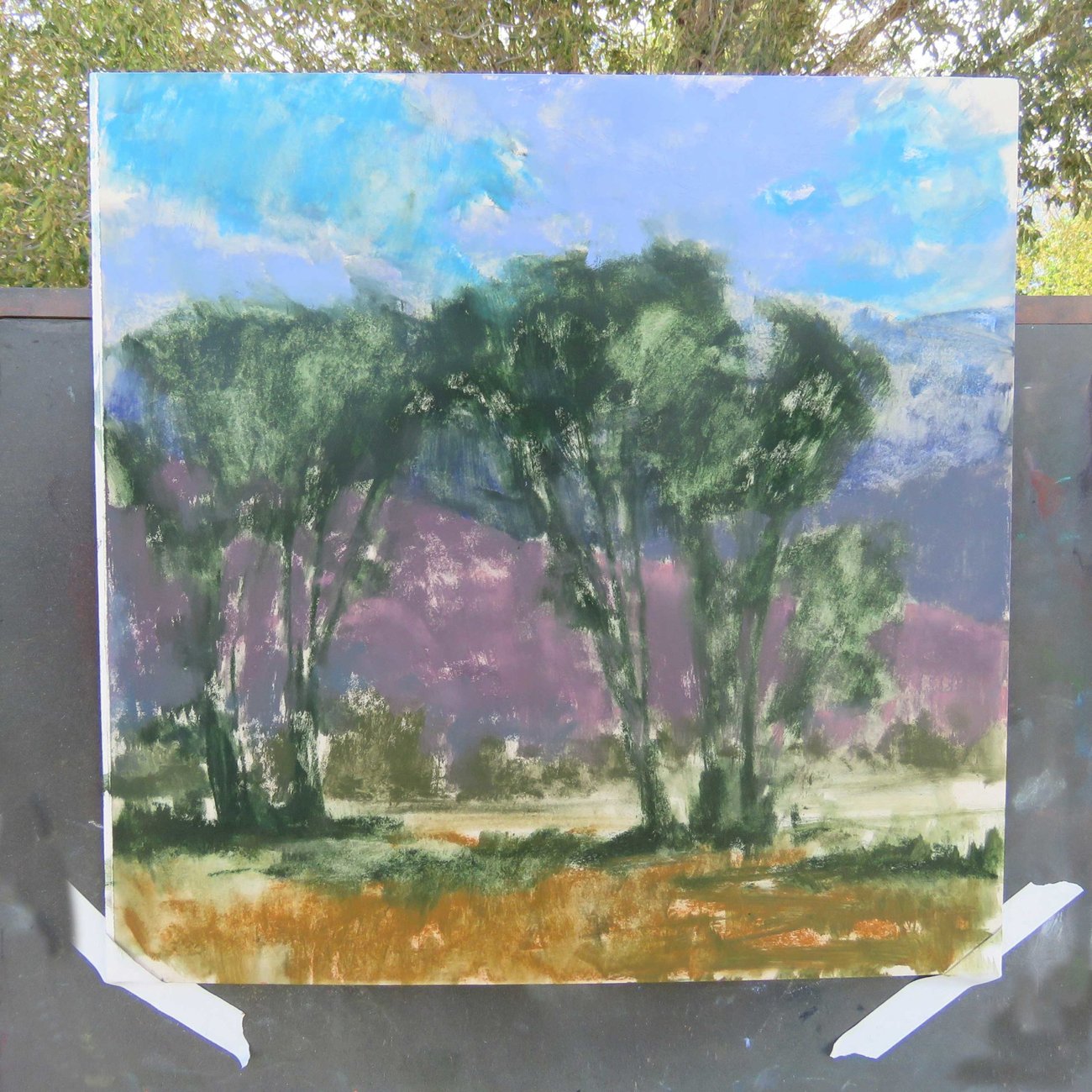 | — advertisement — |  | ***
Final Painting: | 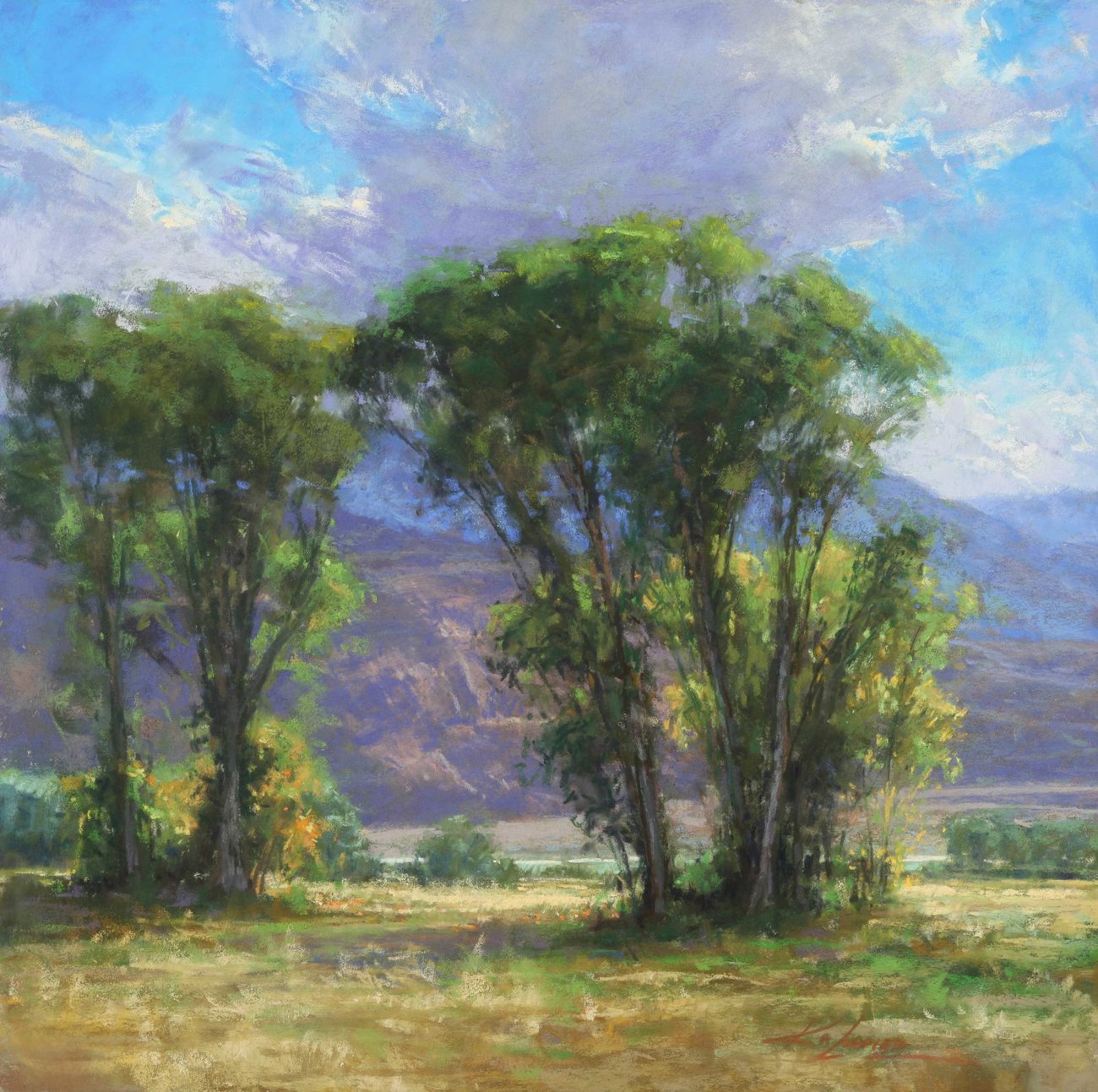 | Kim Lordier, "Cottonwood Drama in Round Valley," 2018, pastel, 16 x 16 in., Collection the artist, Plein air
|
|
|
|
Read & share this story online > | — advertisement — |  | The Ranger, Adirondacks | By Eric Rhoads |  | Winslow Homer (1836-1910), "The Ranger, Adirondacks," ca 1882, watercolor on paper, 13.8 x 20 in., collection David Owsley Museum of Art, Ball State University | Winslow Homer painted this image, "The Ranger, Adirondacks" in 1882. This is the view from the mountain of the lake where we spend our summers, which includes Paul Smith's College where I hold my annual Publisher's invitational Paint Out Adirondacks. I've climbed St. Regis Mountain many times in the last 30+ years and have painted this scene in this very spot.
Homer had a love affair with the state of New York and frequented the Adirondacks many times (there is a book of his work in the ADKS). Some believe he stayed at Paul Smith's Hotel (where the college is now), which attracted a who's who.
It's logical because many of his Adirondack paintings appear to have been painted on this chain of lakes with rare small islands with pine trees, only found on a couple of lakes up here. And there were not a lot of places to stay here in the Wilderness at that time.
See photo essays of our previous Publisher's Invitationals to the Adirondacks at OutdoorPainter.com. | — advertisement — |  | — advertisement — |  |
|
| | |
|
Plein Air Today is committed to protecting and respecting your privacy. We do not rent or share your email address. By submitting your email address, you consent to Streamline Publishing delivering regular email issues and advertisements. To end your Plein Air Today e-mail subscription and associated external offers, unsubscribe here. To learn more about Streamline Publishing events, products, and offerings visit StreamlinePublishing.com
Copyright 2022 Streamline Publishing, Inc. All rights reserved.
PleinAir Today® is a registered trademark of Streamline Publishing, Inc. |
|
|
|
|









No comments:
Post a Comment