Rethinking Light and Shadow
Click here to see this email on the web |  | Tuesday, November 22nd, 2022 | | Light Up Your Trees | By Christopher Volpe | Share this article:     | 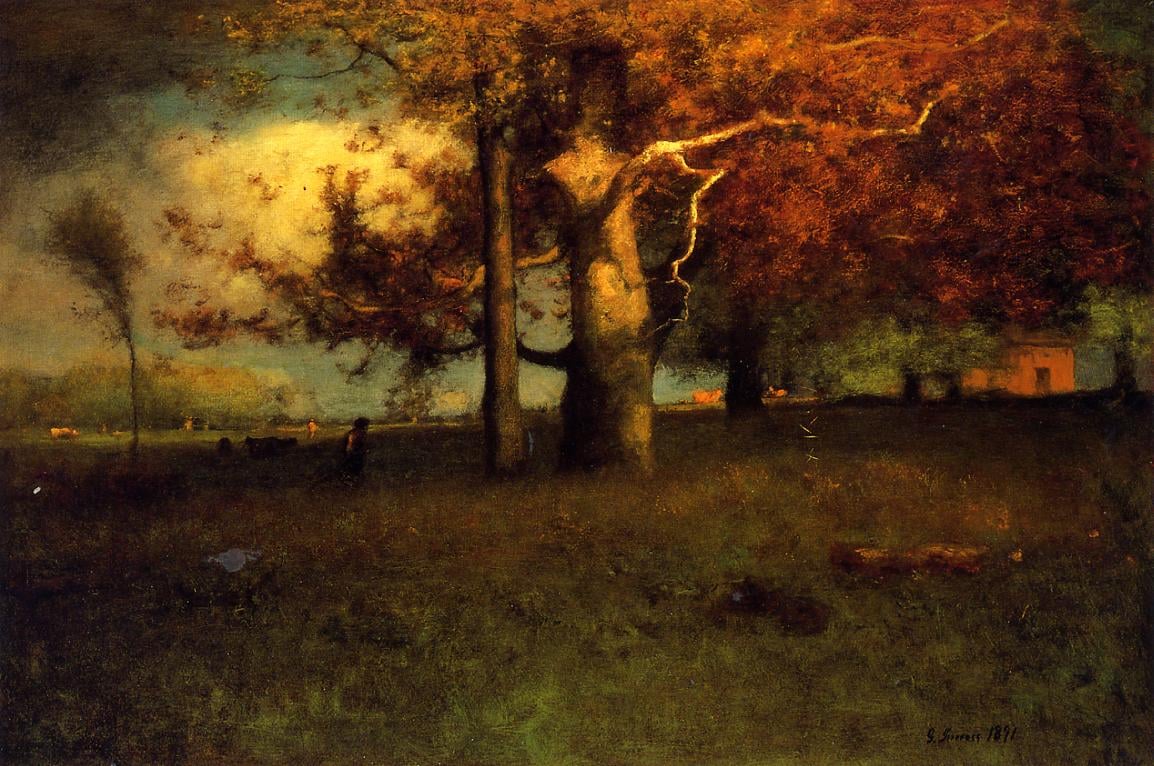 | George Inness, Autumn, Montclair | You can paint a tree or you can use it as a site of mystery, drama, and luminous significance.
Most tree-painting tutorials focus on creating organic shapes and building believable foliage and trunk masses with careful handling of light and shadow values. Naturally, getting a handle on modeling the forms is essential for painting believable trees, but it needn't stop there.
How you light your trees is as important as from which direction the light is coming.
Side-lighting
The strong side-lighting in this painting by George Inness (1825-1894) fosters a sense of deep quiet and mystery. | 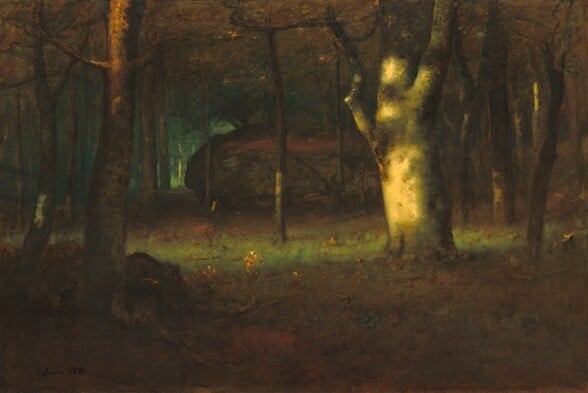 | George Inness, Sunset in the Woods, 1891 | The lit tree glows within the interior gloom of a forest clearing at sundown, bringing high drama to what would otherwise be a well-rendered but relatively lifeless painting.
| — advertisement — |  | Inness uses side-lighting to great effect again in Near the Village, October (below). Now, this setting is practically the opposite of the previous one (a brilliantly lit open meadow vs. a dusky forest grotto), but the strong, warm side-light on the far right tree trunk has a similarly dramatic effect. As in the previous Sunset in the Woods, it also serves to create a focal point and a hierarchy for the eye – we go to that tree first and next we see the small, white-shirted figure standing some distance back, spotlighted by the same rays of late afternoon light. | 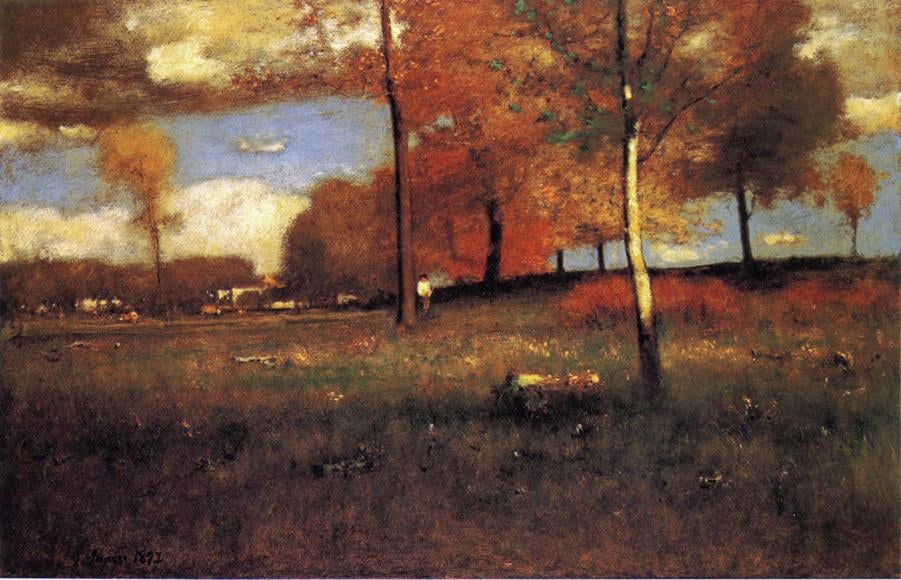 | George Inness, Near the Village, Autumn, 1891. Oil on canvas, 30 x 45 in. | This next painting, The Tree by Dennis Miller Bunker, falls somewhere between the last two in terms of setting, mood, and drama. But again it's the contrast between the areas in shadow and just those few select areas receiving strong light that makes it sing.
| — advertisement — |  | 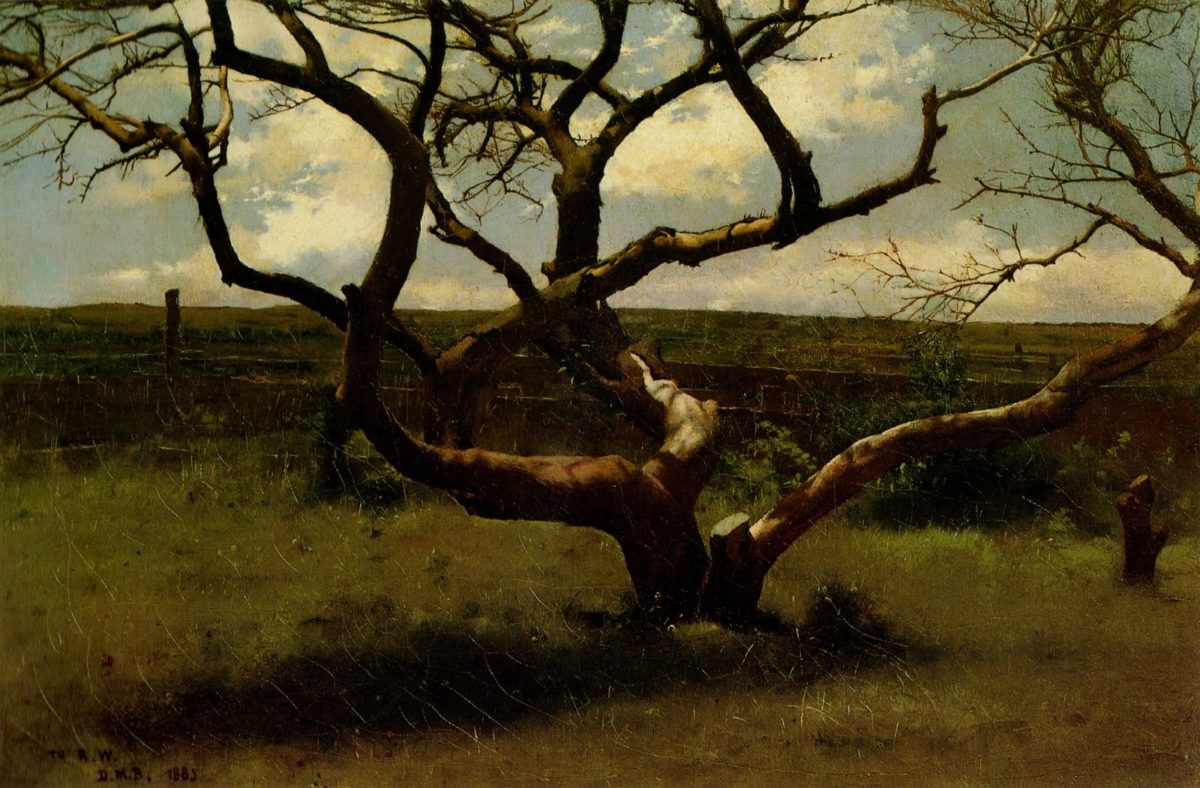 | Dennis Miller Bunker, Tree, 1885 | In the following painting by Paul Kratter, the strong light coming from the left side strikes the tips and sides of the trees. The effect is to create contrast with the contiguous darker and cooler tones, thus enlivening the entire painting with new interest.
| 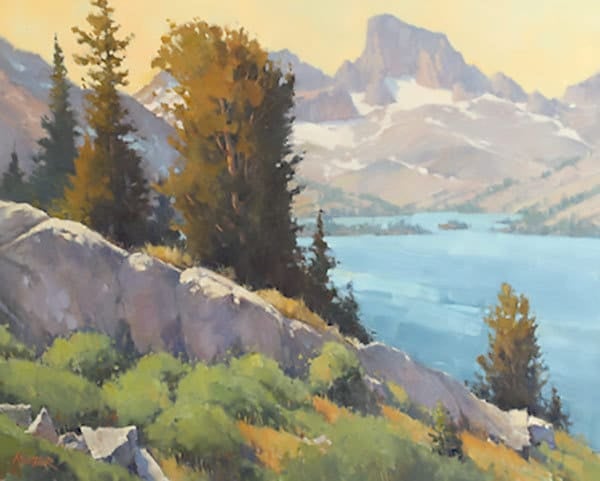 | Paul Kratter, From on High, oil | If you're interested in improving your tree-painting skills, there are few better teachers than Paul Kratter, whose video you can look into here.
Backlighting Brings Mood to the Fore
Backlighting in the Tonalist manner, as Inness and Corot both employed, creates a luminous atmosphere that suffuses the entire painting with a lyrical, at times melancholy mood. | 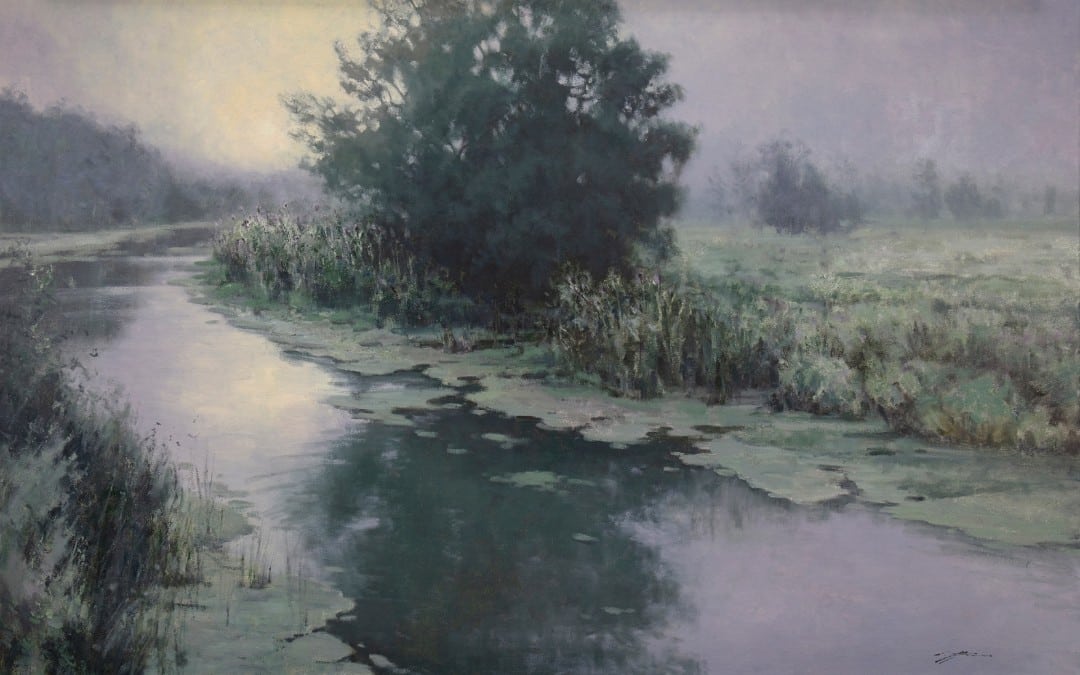 | Matthew Cutter, Morning Mist, oil, 30×48 | That's what we see in this Tonalist/Monet-esque piece by Matthew Cutter. The light shining through, not on, the tree branches helps express the soft, vibratory illumination that animates the entire work. Cutter's painting was tapped for inclusion in the "Top 100" landscape category in the Plein Air Magazine monthly "Salon" competition. (Entries are being accepted for the monthly Salon on an ongoing basis – see all the many finalists and winners for last month here.)
In the woods,
Chris |
|
|
|
— advertisement — |  |
|
| | |
|
Inside Art is committed to protecting and respecting your privacy. We do not rent or share your email address. By submitting your email address, you consent to Streamline Publishing delivering regular email issues and advertisements. To end your Inside Art e-mail subscription and associated external offers, unsubscribe here. To learn more about Streamline Publishing events, products, and offerings visit StreamlinePublishing.com
Copyright 2022 Streamline Publishing, Inc. All rights reserved.
Inside Art® is a registered trademark of Streamline Publishing, Inc. |
|
|
|
|










No comments:
Post a Comment